


As the long, humid summer slowly gives way to autumn, Japan begins to welcome one of the simplest but most anticipated tastes of the new season: shinmai (新米), or newly harvested rice.
Walk through a Japanese supermarket in early autumn, and you may notice bags of rice proudly marked with the two characters 新米. At first, this might seem surprising. Rice is available throughout the year, so why should rice harvested only a few months earlier feel so special?
The answer lies in Japan’s deep relationship with rice, agriculture, and the changing seasons. Shinmai is not simply “new rice.” For many people, its arrival represents the harvest, the beginning of autumn, and the pleasure of enjoying a familiar food at its freshest.
For students studying in Japan, shinmai offers an easy way to experience seasonal culture without visiting a festival or famous sightseeing spot. Sometimes, discovering Japan can begin with something as ordinary as a bowl of freshly cooked rice.
What Exactly Is Shinmai?
The word shinmai literally means “new rice,” but in Japan it also has an official meaning.
Under Japanese food-labeling rules, rice can be sold with the label shinmai when it was harvested that year and processed and packaged by December 31 of the same year.
In everyday life, however, people usually associate shinmai with the first freshly harvested rice appearing in stores during autumn.
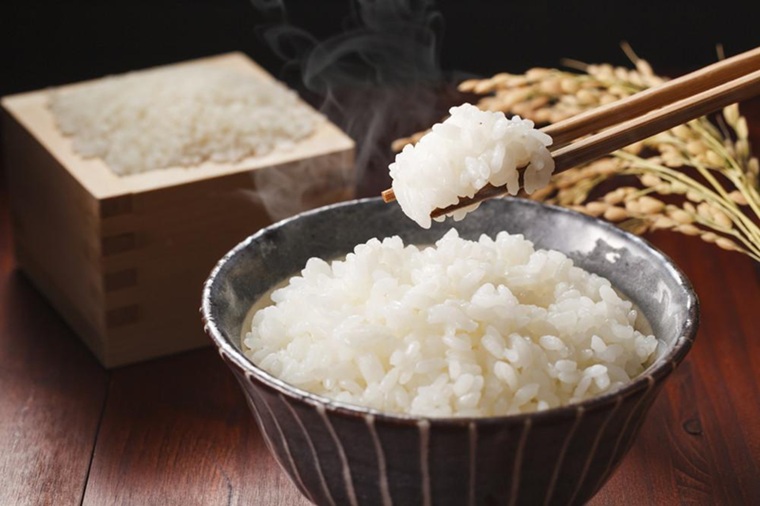
Compared with rice that has been stored for a longer period, freshly harvested rice is often appreciated for its fragrance, glossy appearance, and pleasant texture. When cooked, the grains shine softly, and the rice itself becomes the main attraction of the meal rather than simply something served beside other dishes.
This is why people often recommend eating shinmai in a very simple way. A bowl of steaming white rice with pickles, grilled fish, miso soup, or even just a little salt allows you to notice the flavor and texture of the rice itself.
In a cuisine famous for sushi, ramen, tempura, and countless elaborate dishes, there is something surprisingly satisfying about celebrating something as simple as freshly cooked rice.
Rice and the Rhythm of the Seasons
Rice has shaped Japanese life for centuries.
Traditional farming communities organized much of their year around the rice-growing cycle. Fields were prepared in spring, seedlings were planted as the weather warmed, rice plants grew beneath the summer sun, and golden fields were finally harvested in autumn.
The harvest therefore represented much more than the arrival of food. It marked the successful completion of months of work and was closely connected with prayers, festivals, and expressions of gratitude.
Many autumn festivals throughout Japan developed around this agricultural rhythm. People thanked local deities for the harvest and prayed for another successful year ahead.
Modern life has changed dramatically, of course. Most people now buy rice from supermarkets rather than knowing the farmers who produced it. Yet the arrival of shinmai still preserves a small part of that older seasonal rhythm.
Seeing the 新米 label on a supermarket shelf is a quiet reminder that somewhere beyond the city, fields have turned golden and another harvest has begun.
Why Does New Rice Feel So Special?
Japan has many foods that announce the arrival of a season.
Strawberries appear in winter, bamboo shoots signal spring, watermelon evokes summer, and chestnuts and sweet potatoes are associated with autumn. Shinmai belongs to the same seasonal calendar, but it feels especially familiar because rice is such an everyday food.
That combination—ordinary yet seasonal—is part of its appeal.
When the first bags of new rice arrive, supermarkets may create special displays announcing the harvest year and production region. Restaurants sometimes highlight dishes made with shinmai, while families may look forward to trying the year’s first batch at home.
The best way to appreciate it is often the simplest: freshly cooked and still steaming.
Some people enjoy the first bowl with umeboshi, nori, or a raw egg. Others pair it with grilled autumn fish or seasonal vegetables. Onigiri is another excellent choice because there are few strong flavors to hide the character of the rice.
It is a small pleasure, but Japanese seasonal culture is often built around exactly these kinds of small pleasures.
Reading a Bag of Rice in Japan
For Japanese learners, buying rice can also become a surprisingly useful language exercise.
Look closely at a bag in the supermarket and you will encounter words such as 産地 (sanchi), meaning production area; 品種 (hinshu), meaning variety; and 産年 (sannen), referring to the year the rice was produced.
You will also quickly discover that “Japanese rice” is not one single type of rice.
Different regions have developed their own varieties, each with slightly different characteristics. Some are particularly sticky, some have firmer grains, and others are designed to remain delicious even after cooling.
Trying rice from different prefectures can therefore become a small food adventure. You do not need expert knowledge. Buy a smaller bag, cook it at home, and compare it with the rice you normally eat.
You may begin to notice differences you had never thought about before.
Discovering Shinmai in Fukuoka
Students living in Fukuoka do not have to look far to discover local rice culture.
Two representative varieties grown in Fukuoka Prefecture are Yumetsukushi (夢つくし) and Genkitsukushi (元気つくし). Fukuoka Prefecture describes Yumetsukushi as a local variety known for its gloss, pleasant stickiness, and flavor. Genkitsukushi, meanwhile, was developed in Fukuoka to grow well even during hot summers and is known for firm grains, shine, and a satisfying level of stickiness.
Genkitsukushi is particularly interesting in an era of increasingly hot summers. The variety was developed with resistance to high temperatures in mind, and the rice remains enjoyable even after it cools, making it suitable for bento and onigiri. The 2025 harvest of Genkitsukushi also received the highest “Special A” rating in the Japan Grain Inspection Association’s taste ranking.
The harvest itself brings the seasonal story close to home. Genkitsukushi traditionally begins to be harvested around late September, with new rice reaching consumers afterward.
So when you visit a supermarket in Fukuoka during autumn, take a moment to look at the rice section. Instead of automatically choosing a familiar package, search for the words 新米, 夢つくし, or 元気つくし.
A very ordinary shopping trip can suddenly become a small lesson in local agriculture.
Tasting the Beginning of Autumn
One of the most interesting things about living in Japan is discovering how closely everyday life follows the seasons.
The change is not always dramatic. Autumn does not begin only when mountains turn red and yellow. Sometimes it arrives quietly—in the sound of insects at night, in a Tsukimi display at a shop, or in two characters printed on a bag of rice.
Shinmai
Shinmai represents something very simple: this year’s harvest has arrived.
Yet behind that bowl of rice are months of planting, summer heat, rain, careful cultivation, and finally harvesting. Eating it connects an everyday meal with the agricultural landscape and seasonal rhythm of Japan.
For students experiencing autumn in Japan, you do not need to travel far to participate in this tradition. Pick up some local shinmai, cook a fresh pot of rice, and try the first bite without adding anything at all.
You may discover that one of the quietest ways to experience Japanese autumn is also one of the most delicious.