


As the intense heat of summer slowly begins to fade, Japan enters a quieter and gentler season. Evenings become cooler, insects replace cicadas as the soundtrack of the night, and the moon seems especially bright in the clear autumn sky. For centuries, Japanese people have celebrated this seasonal change through Tsukimi (月見), literally meaning “moon viewing.”
Tsukimi is much more than simply looking at the moon. It is a tradition connected with poetry, seasonal food, harvests, and an appreciation of nature. Even today, when city lights often make the night sky difficult to see, the arrival of Tsukimi season can still be found everywhere—from traditional decorations to special sweets and even hamburgers.
For students studying in Japan, Tsukimi offers a wonderful opportunity to discover how an ancient tradition continues to appear in modern everyday life.
A Tradition Beneath the Autumn Moon
The custom of admiring the autumn moon has a long history in Japan. Moon-viewing gatherings became especially popular among aristocrats during the Heian period, when people enjoyed poetry, music, and drinks while watching the moon reflected on ponds and rivers.
Over time, the custom spread beyond the aristocracy and became connected with agricultural life. Autumn was an important harvest season, and people began offering food to the moon as a way of expressing gratitude for crops and praying for future abundance.
The most famous night for Tsukimi is Jūgoya (十五夜), or the “Fifteenth Night,” traditionally associated with the full moon of the eighth month of the old lunar calendar. Because the traditional calendar does not match the modern one exactly, Jūgoya falls on a different date each year, usually in September or October.
The moon seen on this night is often called the Chūshū no Meigetsu (中秋の名月)—the famous harvest moon of mid-autumn.
Dango, Susuki, and the Rabbit on the Moon
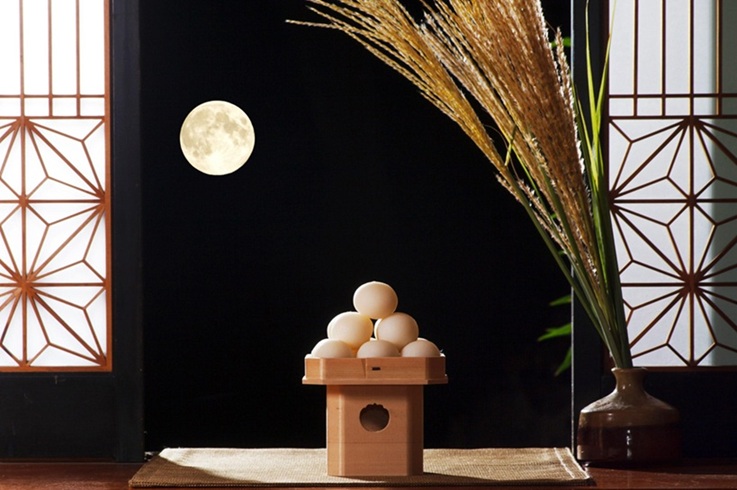
A traditional Tsukimi display is simple but full of symbolism.
Perhaps the most recognizable item is Tsukimi dango, small white rice dumplings arranged in a pyramid. Their round shape resembles the full moon, and they are traditionally offered as a gesture of gratitude for the autumn harvest.
Another important decoration is susuki, or Japanese pampas grass. Its tall silver leaves move beautifully in the autumn breeze. Because susuki resembles rice plants, it was traditionally used as a substitute when newly harvested rice was not yet available. It was also believed to protect people from misfortune.
And then there is the rabbit.
In many Western cultures, people look at the patterns on the moon and imagine a “man in the moon.” In Japan, however, people traditionally see a rabbit making mochi rice cakes.
This image comes from an old Buddhist story about a rabbit that offered itself as food to a hungry traveler, who was actually a deity in disguise. The rabbit was later placed on the moon to honor its kindness.
Once you know the story, you may never look at the full moon in Japan in quite the same way again.
Why the Moon Matters in Japanese Culture
The moon appears again and again in Japanese poetry, paintings, literature, and seasonal traditions. But interestingly, Japanese aesthetics do not always consider a perfectly clear full moon to be the only beautiful one.
A moon partly hidden behind clouds can be just as appealing. So can moonlight reflected on water or glimpsed between tree branches.
This reflects a broader Japanese appreciation for things that are incomplete, temporary, or constantly changing. Rather than demanding a perfect view, people can find beauty in the atmosphere surrounding the moon.
This idea appears frequently in classical poetry. Instead of simply describing the moon itself, poets wrote about autumn wind, distant insects, clouds passing through the night sky, or the feeling of waiting for the moon to appear.
Tsukimi is therefore not only about seeing something beautiful. It is about noticing the season and taking a moment to appreciate it.
From Ancient Tradition to the “Tsukimi Burger”
Tsukimi may have a history of more than a thousand years, but modern Japan has found some surprisingly playful ways to keep the tradition alive.
Walk into supermarkets or convenience stores during Tsukimi season and you may find moon-shaped sweets, rabbit-themed desserts, seasonal wagashi, and special packages decorated with full moons.
Restaurants also join in. One particularly famous example is the Tsukimi Burger, which usually features a fried egg whose round yellow yolk represents the full moon. Every autumn, various restaurant chains introduce their own Tsukimi menus, and their arrival has become a small seasonal event in itself.
You may also encounter dishes such as Tsukimi udon or Tsukimi soba, where an egg is placed on top of the noodles to resemble the moon.
These modern interpretations show something interesting about Japanese seasonal culture. Traditions do not necessarily disappear when lifestyles change. Instead, they are often adapted into new forms.
A custom that once belonged to aristocrats writing poetry beneath the moon can now appear on a fast-food menu—and somehow, both can still remind people that autumn has arrived.
Enjoying Tsukimi in Fukuoka
For students living in Fukuoka, enjoying Tsukimi does not require a special ceremony. Sometimes all you need is a clear evening and a place where you can see the sky.
Fukuoka’s relationship with the sea makes waterfront areas especially attractive for moon viewing. Around Hakata Bay, the combination of moonlight, water, and the city skyline can create a beautiful autumn evening. Seaside areas such as Momochi are also pleasant places for an evening walk as the weather begins to cool.
Temples, shrines, gardens, and parks throughout Fukuoka may also hold seasonal events connected with the autumn moon. Even without attending an organized event, simply buying Tsukimi dango from a wagashi shop and enjoying them outside with friends can be a simple way to participate in the tradition.
You may also notice Tsukimi appearing around you without actively searching for it. Look at advertisements in September and October, check the seasonal shelves at convenience stores, or visit a restaurant. Rabbits, round eggs, pampas grass, and full-moon designs begin appearing everywhere.
Recognizing these symbols can make everyday life in Japan a little more interesting.
Looking Up Together
Modern life rarely gives us a reason to stop and look at the sky. We spend much of our time looking at phones, computer screens, train schedules, and textbooks.
Tsukimi offers a simple invitation to do something different: look up.
You do not need to understand classical Japanese poetry or prepare an elaborate traditional display. Buy some dango, take a walk after sunset, find a quiet place, and see whether you can spot the rabbit on the moon.
For students experiencing autumn in Japan for the first time, Tsukimi can be a gentle reminder that Japanese seasonal culture is not found only in museums or history books. It is still present in food, advertisements, conversations, and small changes in everyday life.
As summer slowly gives way to autumn, perhaps the easiest way to notice the changing season is simply to look toward the night sky.
The same moon that inspired poets more than a thousand years ago is still shining above Japan today.