



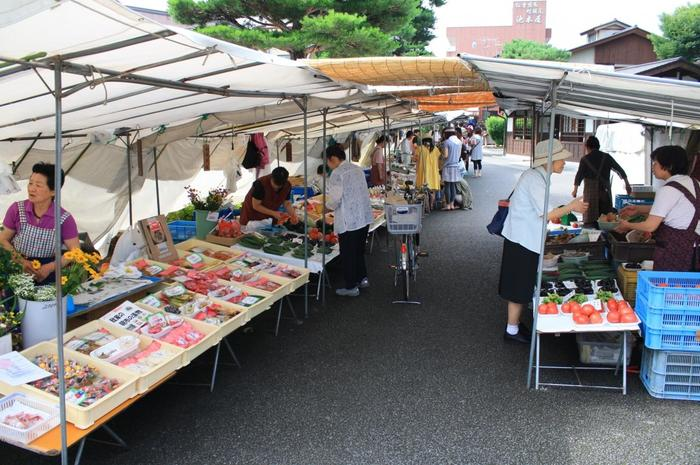
In many parts of Japan, the day does not begin with the rush of trains or the hum of office buildings—it begins quietly, in the soft light of early morning, at the local asaichi, or morning market. Before the streets fill and the shops open, vendors are already arranging fresh vegetables, seafood, and handmade goods, while neighbors greet each other with familiar smiles. These markets, often held near ports, temples, or town centers, are more than just places to shop. They are living spaces where the rhythms of agriculture, fishing, and daily life come together, creating a sense of connection that is deeply rooted in local culture. Like a gentle morning ritual shared by a community, each market reflects the life of the place it belongs to.
From First Light to Daily Rhythm
The origins of morning markets in Japan stretch back to a time when freshness depended entirely on timing. Farmers harvested vegetables at dawn, and fishermen returned to shore with their catch in the early hours. Without modern storage, selling goods quickly was essential, and so markets naturally formed in the morning. Over time, this practical necessity became a cultural habit.
Even today, the structure of asaichi follows this rhythm. Vendors arrive before sunrise, setting up stalls while the sky is still dim. As the morning light grows, customers begin to gather—first the regulars, then visitors. By late morning, many markets begin to wind down, their purpose fulfilled for the day. This cycle gives the market a sense of impermanence, much like a daily performance that appears and disappears with the sun.
For local residents, the morning market is woven into everyday life. It is a place to buy ingredients for the day’s meals, but also a space that marks the beginning of the day itself. In this way, asaichi are not separate from daily life—they shape its rhythm.
Freshness, Seasonality, and Local Identity
What distinguishes morning markets from other forms of shopping is their direct connection to the land and sea. The products sold are often harvested or caught just hours before, making freshness not just a selling point but a defining feature. Fish still glisten with seawater, vegetables carry traces of soil, and seasonal fruits reflect the time of year.
This immediacy creates a strong sense of local identity. Coastal markets emphasize seafood, while inland markets highlight agricultural products. Each region expresses itself through what is available that morning. In this sense, the market becomes a living map of local resources and traditions.
Seasonality also plays an important role. Just as Japan’s culture places great value on seasonal change, morning markets naturally reflect it. Spring brings tender greens, summer offers vibrant fruits, autumn features mushrooms and root vegetables, and winter highlights preserved foods and warming ingredients. Visiting a market is, in many ways, a way of experiencing the season through taste and sight.
A Place for Conversation and Connection
Beyond food, morning markets are spaces of communication. Transactions here are rarely silent. Customers ask questions, vendors offer suggestions, and conversations flow naturally. A simple purchase often becomes an exchange of knowledge—how to cook a fish, when a vegetable is at its best, or what to try next time.
These interactions create relationships that develop over time. Regular customers are recognized, preferences are remembered, and trust is built gradually. For many elderly residents, the market serves as an important social space, providing daily interaction and a sense of belonging.
For visitors and students, this environment offers a unique opportunity to experience natural Japanese conversation. Unlike formal settings, the language used here is casual, practical, and full of local character. Listening to these exchanges can reveal how communication functions in everyday life, beyond textbooks and classrooms.
The Taste of Fukuoka: Morning Markets and Local Flavor
In Fukuoka, morning market culture reflects the city’s strong connection to food and the sea. One of the most notable areas is the Nagahama district, known for its fish market. Early in the morning, seafood arrives and is quickly distributed, creating a lively atmosphere where freshness is immediately visible. Nearby eateries often serve simple meals made from these ingredients—grilled fish, rice, and miso soup—allowing visitors to taste the morning’s catch in its purest form.
Another important place is the 柳橋連合市場 (Yanagibashi Rengo Market), often referred to as “Fukuoka’s kitchen.” While it operates throughout the day, its early hours capture the spirit of a traditional asaichi. Narrow aisles are lined with vendors selling seafood, meats, and local specialties, and the atmosphere is both energetic and intimate. Customers move slowly, stopping to talk, observe, and choose carefully.
What makes Fukuoka’s markets especially memorable is their balance of simplicity and richness. The food is not overly elaborate, but it is deeply satisfying, emphasizing quality and freshness. This reflects a broader aspect of Fukuoka’s culture—an appreciation for good food that is accessible, honest, and rooted in daily life.
For students living in Fukuoka, visiting these markets offers more than just a meal. It provides a window into the city’s character, where food, people, and place are closely connected.
A Living Tradition in Modern Life
Despite the spread of supermarkets and convenience stores, morning markets continue to exist across Japan. Their persistence suggests that they fulfill something deeper than convenience. They offer a slower pace, a sense of human connection, and a direct link to the sources of food.
In modern life, where speed and efficiency are often prioritized, asaichi remind people of another way of living—one that values presence, conversation, and the rhythm of the natural world. They are not simply markets, but spaces where tradition adapts quietly, continuing to serve the needs of the present.
Morning markets may begin early and end quickly, but their impact lasts throughout the day. They provide food, yes—but also connection, continuity, and a sense of place. To walk through a morning market is to witness the beginning of daily life in Japan, where community is built not through grand events, but through small, repeated moments shared each morning.