


“Arigatou” (Thank you) is one of the very first words that students learn when they begin studying Japanese. But have you ever thought about what this word really means? In English, we usually say “Thank you” or “I appreciate it.” These expressions clearly show the speaker’s feelings: I am thanking you.
What Does “Arigatou” Really Mean?
Japanese offers a slightly different perspective.
The word arigatou originally comes from the expression “ari-gatai” (有り難い), which literally means “something that is difficult to exist” or “something rare.” Over time, it came to express the feeling that what has happened is precious, uncommon, and worthy of gratitude.
In other words, when Japanese people say “Arigatou,” they are not only expressing their own thanks. The expression also reflects the idea that the event itself is something truly fortunate and valuable.
Japanese Doesn’t Always Say “I” or “You”
This way of thinking can also be seen in many other aspects of the Japanese language.
For example, Japanese often leaves out the subject.
“Tabemashita.” (Ate.)
“Ikimasu.” (Will go.)
“Daijoubu desu.” (It’s okay.)
These sentences are perfectly natural in Japanese, even without saying who is speaking. The listener understands the meaning from the situation and the shared context.
While English often makes the subject clear with words like “I” or “you,” Japanese tends to focus more on what is happening in the shared moment than on who is performing the action.
Sharing the Same Moment
This is also why conversations in Japan often begin with phrases like:
“It’s hot today, isn’t it?”
“The cherry blossoms are beautiful.”
“It’s raining today.”
These are more than comments about the weather. They are a way of sharing the same experience and creating a connection with another person.
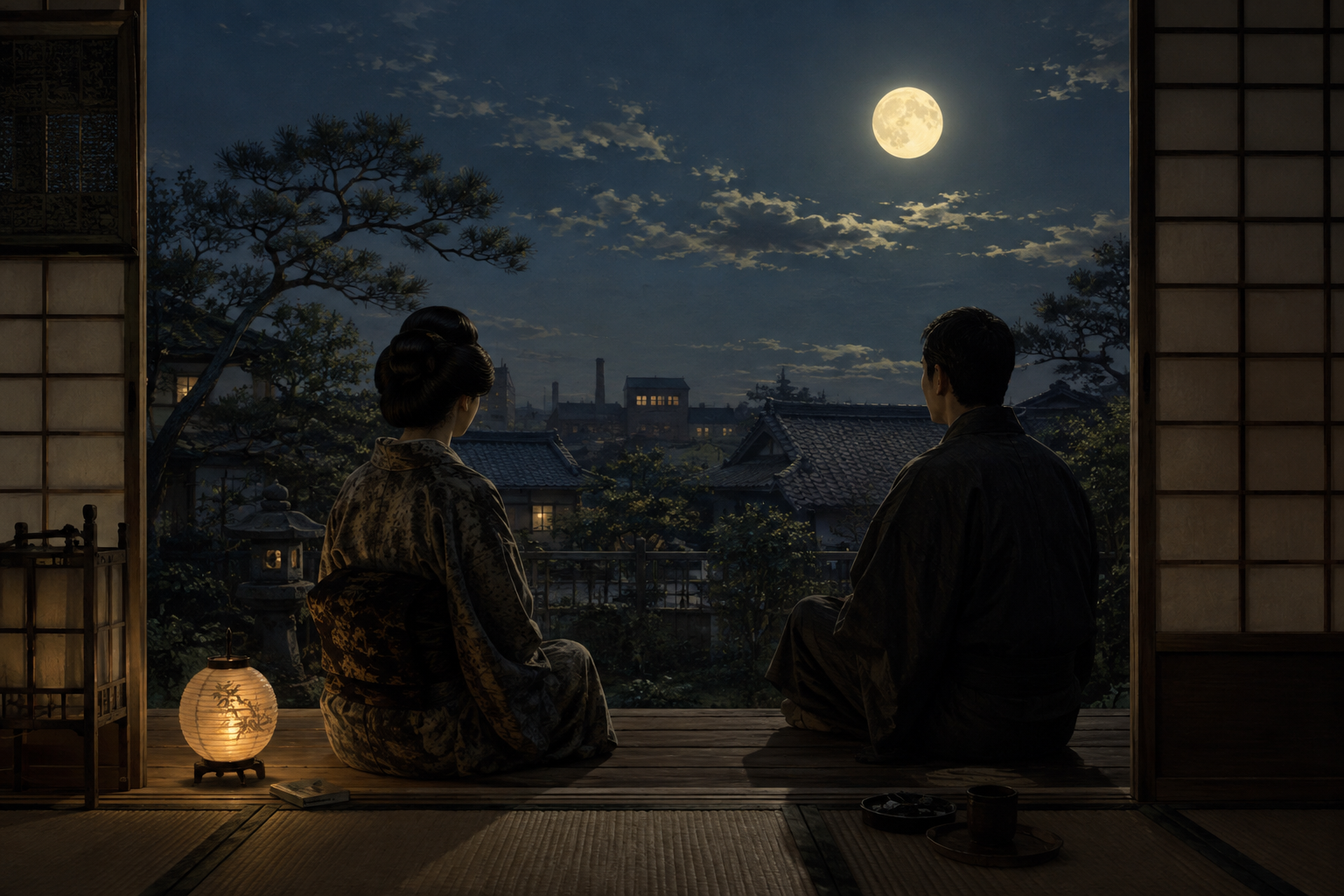
This idea reminds me of a famous story about the novelist Natsume Soseki and the phrase “Tsuki ga kirei desu ne” (“The moon is beautiful, isn’t it?”). It is said that rather than directly saying “I love you,” the beauty of the moon could be shared as a way of expressing that feeling. In the same way, the feeling is not necessarily expressed by saying “I” or “you,” but can be shared through the beauty of a moment experienced together.
Language Reflects Culture
Of course, neither Japanese nor English is better than the other. Each language reflects the history and culture of the people who speak it.
That is why learning Japanese is about much more than vocabulary and grammar. It is also an opportunity to discover how Japanese people think, communicate, and build relationships.
What You Discover Beyond the Textbook
When you study in Japan, you will encounter these expressions every day—not only in the classroom, but also at your part-time job, in shops, and in conversations with friends. Little by little, you will begin to understand meanings that cannot be fully explained in a textbook.
Japanese Opens a Window to a Different World
Japanese is more than a language. It is a window into Japanese culture and a different way of seeing the world.
If you are thinking about studying in Japan, learning Japanese may give you something even more valuable than language skills—it may change the way you understand people and communication itself.
Let’s learn Japanese language and culture together at NILS!
⇓Follow us on Instagram for more about school life in Japan⇓