


In Japan, the change of seasons is very important. There are many traditional events that help people feel these seasonal changes. Two of the most well-known events are Setsubun and Risshun. Learning about these traditions is a great way to understand how Japanese people think about time and nature.
What Is Risshun?
Risshun means “the start of spring” according to the traditional calendar.
However, even though it is called the beginning of spring, the weather is still very cold. In many areas of Japan, it may even snow around this time.
For people who are new to Japan, this can be surprising. You might think, “It doesn’t feel like spring at all!” But in Japan, Risshun is important because it shows how people value the idea of seasons, not only the actual temperature.
What Is Setsubun?
Setsubun is the day before Risshun. It usually falls around February 3rd, although the exact date can change depending on the year.
The word Setsubun means “seasonal division.” Long ago, it referred to the day before the start of each season, but today it mainly refers to the day before spring begins.
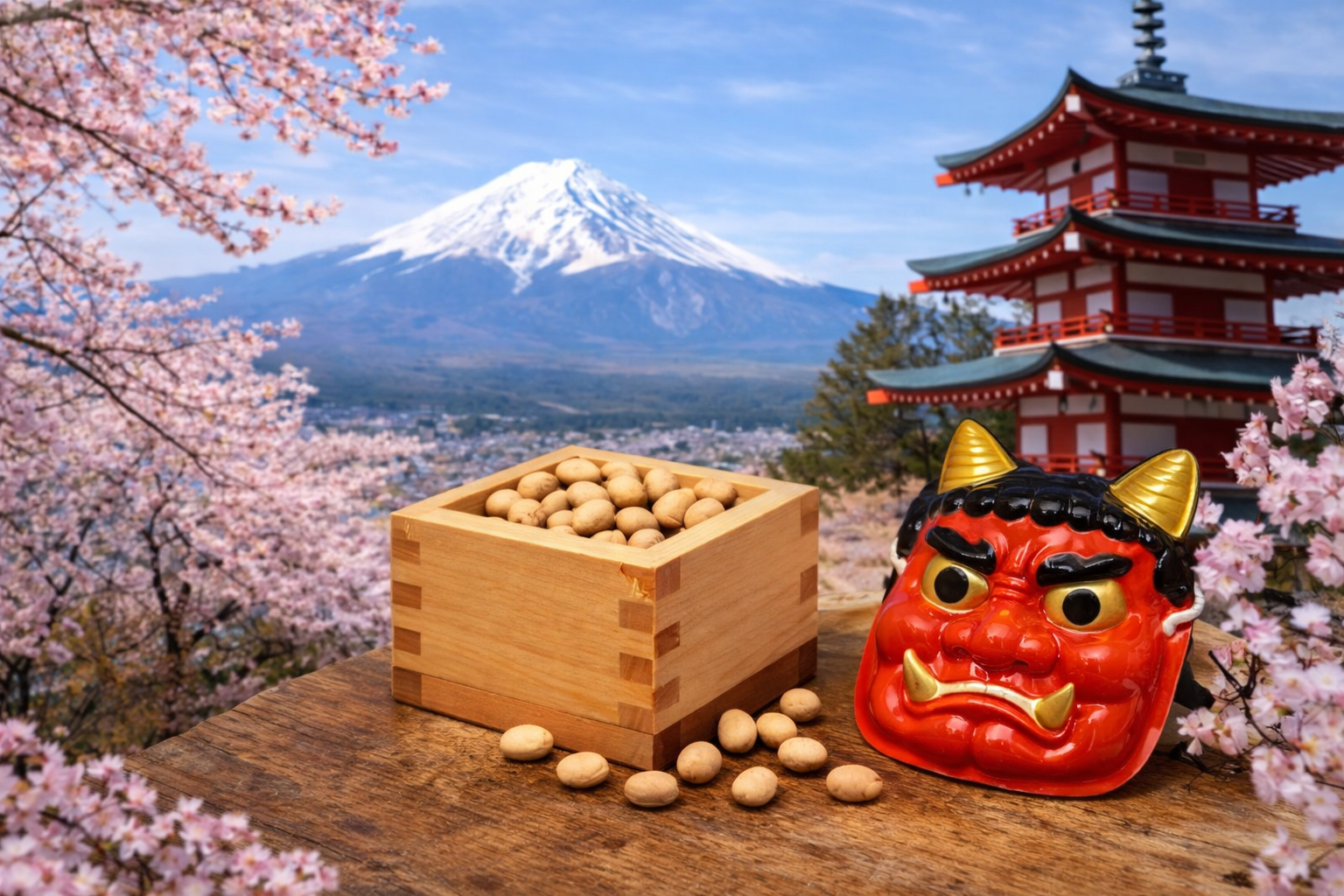
On Setsubun, people do a traditional activity called mamemaki, or bean throwing. While throwing roasted soybeans, they say:
“Oni wa soto! Fuku wa uchi!”
(“Out with the demons! In with good fortune!”)
This is done to chase away bad luck and welcome good luck for the new season. Many people also eat the same number of beans as their age, hoping to stay healthy throughout the year. At our school, NILS, teachers explain the meaning of Setsubun every year, and everyone enjoys throwing beans and eating them together.
Seasons Are Changing: Then and Now
In recent years, many people in Japan feel that the seasons are changing. Just as winter starts later than it used to, warm weather also seems to arrive later than before.
Because of this, even when Risshun comes, it may take a long time before we really feel spring.
Still, Japanese people continue to celebrate Risshun as the beginning of spring on the calendar. This shows an interesting part of Japanese culture: even if the weather does not match, the feeling of the season is still important.
Learning Japanese Culture Through the Calendar
In Japan, the calendar, nature, and daily life are closely connected. By learning about Setsubun and Risshun, you can better understand how Japanese people have lived with the seasons for many years.
Words like Risshun, Setsubun, and “according to the calendar” often appear in news and daily conversations. Understanding not only the words but also the culture behind them will help you deepen your understanding of Japanese language and life in Japan.
Even though it is still cold, people say that spring has begun. This way of thinking is one of the unique and beautiful parts of Japanese culture.
Let’s learn Japanese language and culture together at NILS!
Follow us on Instagram for more about school life in Japan:
https://www.instagram.com/nils_japan