



The Japanese New Year, called Shōgatsu, is one of the most important events in Japan. It marks the beginning of a new year and is usually celebrated from January 1st to January 3rd, a period known as Sanganichi. During this time, people spend time with their families and pray for health, happiness, and success in the coming year.
The night of December 31st is called Ōmisoka, the last day of the year. On this night, people eat toshikoshi soba, or year-end noodles. Because soba noodles are long and thin, they symbolize a long life and the hope of passing safely into the new year.
On New Year’s Day, many people visit shrines or temples for Hatsumōde, the first shrine or temple visit of the year. They pray for good health, success in work or study, and overall good fortune. People often draw omikuji, which are fortune slips, and buy protective charms called omamori.
A traditional New Year’s meal is osechi ryōri, which is served in special layered boxes. Each dish has a special meaning. For example, black beans represent health and diligence, and herring roe symbolizes the wish for a growing family. Another common dish is ozōni, a soup containing rice cakes. The ingredients and flavor of ozōni vary by region.
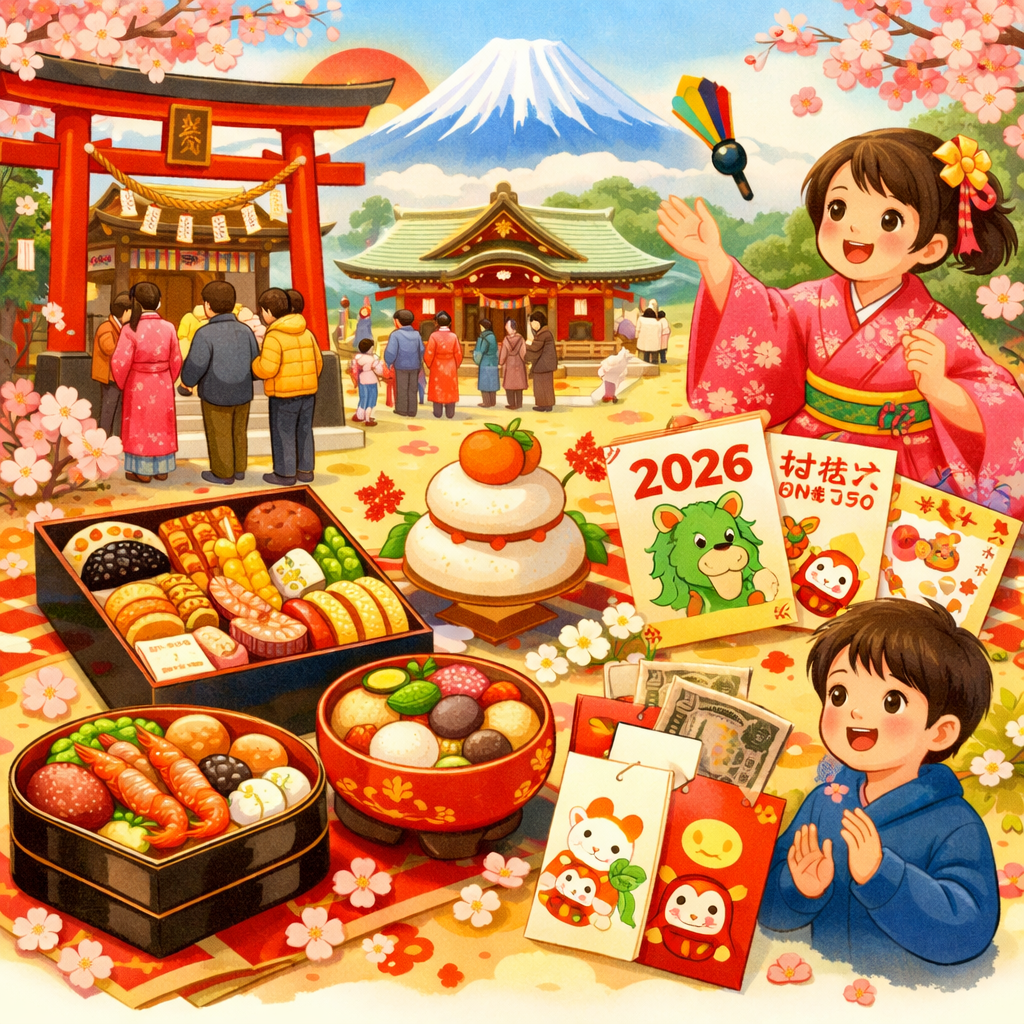
For children, one of the most exciting parts of the New Year is otoshidama, money given by adults in small decorative envelopes. People also enjoy traditional games such as shuttlecock playing, spinning tops, and kite flying.
In this way, the Japanese New Year is a time to value family bonds, reflect on the past year, and welcome the new year with hope and gratitude.
Let’s learn about Japanese language and culture together! Check out our Instagram page.