



Across Japan’s countryside and quiet towns, wooden houses with tiled roofs and deep eaves have stood for generations. These traditional homes, known as kominka (古民家), were once the heart of rural family life. Built with natural materials and designed to harmonize with the surrounding environment, they reflect a way of living rooted in patience, craftsmanship, and community. For many years, however, countless kominka were left empty as populations shifted toward cities. Today, a new movement led by young artisans, designers, and entrepreneurs is giving these old houses a second life—transforming them into cafés, guesthouses, and cultural spaces that reconnect past and present.
From Decline to Opportunity
The decline of kominka began in the postwar period, as Japan modernized rapidly and urban living became the norm. Concrete apartments replaced wooden homes, and younger generations left rural areas in search of education and work. As a result, many kominka were abandoned, slowly aging under sun, rain, and snow. What was once seen as a symbol of tradition became associated with inconvenience and decay.
Yet in recent years, perceptions have shifted. Rising interest in sustainable living, slower lifestyles, and local culture has drawn attention back to these old houses. For some young people, kominka are no longer outdated—they are full of potential. Their spacious layouts, thick wooden beams, and connection to nature offer something modern buildings often lack: warmth, individuality, and a sense of history.
Craftsmanship and Care: Restoring the Old
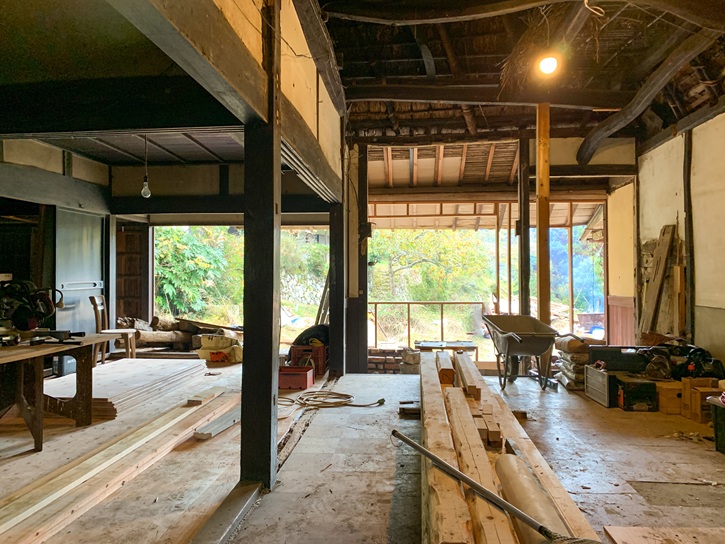
Renovating a kominka is not a simple task. Many houses are over a hundred years old, requiring careful structural reinforcement, insulation updates, and earthquake safety measures. Rather than replacing original features, renovators often work alongside traditional carpenters to preserve earthen walls, wooden pillars, and tatami rooms. This process is slow and hands-on, demanding respect for the building’s original spirit.
Young designers and craftsmen involved in the kominka revival often describe their work as “listening to the house.” Instead of forcing a modern design onto the space, they adapt their plans to the existing structure—allowing uneven floors, exposed beams, and natural light to guide the transformation. The result is a space that feels both old and new, familiar yet refreshed.
New Roles for Old Houses
Today, revitalized kominka can be found across Japan, especially in rural towns and historic districts. Many have been reborn as small cafés, where guests sip coffee while sitting on tatami mats, surrounded by wooden textures and quiet light. Others operate as guesthouses or inns, offering travelers a chance to experience traditional living in a modern, comfortable way.
Some kominka function as shared workspaces, art studios, or community hubs, hosting workshops, exhibitions, and local events. These spaces not only attract visitors but also create places where residents and newcomers interact. In this way, kominka are becoming bridges—connecting generations, lifestyles, and regions.
Tourism, Lifestyle, and Local Identity
The kominka revival is closely tied to local tourism and regional identity. Rather than large-scale development, these projects often emphasize small, meaningful experiences. Visitors stay longer, walk local streets, eat regional food, and learn the stories behind each building. This approach supports local economies while preserving cultural character.
For young people involved in the movement, restoring a kominka is often a lifestyle choice rather than a business strategy alone. Many move from cities to smaller towns, seeking balance between work and life. By living and working in kominka, they participate directly in the communities they help sustain.
A Living Tradition
The revival of kominka is not about turning the past into a museum. It is about allowing tradition to evolve. Old houses gain new functions, while still carrying memories embedded in wood and earth. Each restored kominka tells a story—of craftsmanship, of change, and of people choosing to slow down and build something meaningful.
In modern Japan, where speed and efficiency often dominate daily life, the kominka revival offers a quiet alternative. It reminds us that value can be found in repair rather than replacement, and that the future does not always require leaving the past behind. Sometimes, it begins by opening the doors of an old house and letting new life gently flow in.