



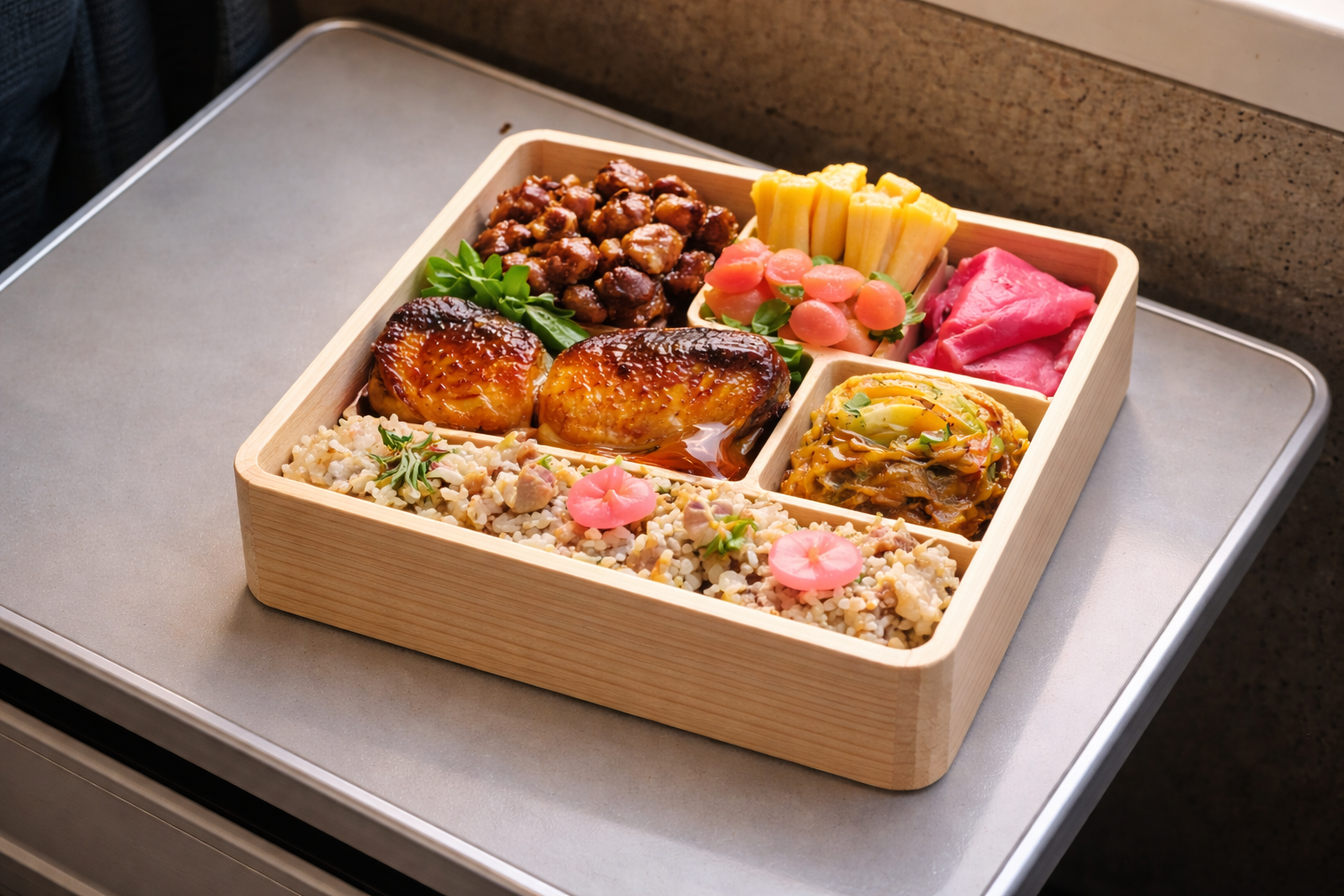
In Japan, travel is not only about reaching a destination—it is also about savoring the moments in between. One of the most beloved symbols of railway travel is the ekiben (駅弁), or station bento. Sold at train stations across the country, ekiben are boxed meals designed to be eaten on board, turning a simple journey into a culinary experience. More than convenient food, ekiben reflect regional identity, seasonal awareness, and the quiet joy of movement. Like a short poem carried in a wooden box, each ekiben tells a story of place.
From Platform Snack to Cultural Icon
The history of ekiben dates back to the late nineteenth century, when Japan’s railway network began to expand. Early travelers needed portable meals, and vendors responded by selling rice balls and simple side dishes at station platforms. Over time, these meals evolved. Instead of offering uniform menus, stations began highlighting local specialties—seafood from coastal towns, beef from rural prefectures, mountain vegetables from forested regions.
By the early twentieth century, ekiben had become part of the romance of train travel. Passengers would arrive early to choose their meal, examining packaging and ingredients before boarding. The act of purchasing an ekiben became as important as the meal itself. Today, despite the speed of the Shinkansen and the convenience of convenience stores, ekiben remain a cherished ritual.
Regional Identity in a Box
What distinguishes ekiben from ordinary boxed lunches is their deep connection to place. Each region proudly presents its own flavors and culinary traditions. In Hokkaido, seafood bowls feature fresh crab and salmon roe. In central Japan, beef-based ekiben showcase local wagyu. Mountain regions emphasize pickled vegetables and seasonal ingredients.
Packaging also reflects regional culture. Some ekiben come in wooden boxes shaped like castles, trains, or local landmarks. Others use traditional paper designs inspired by folk art. The visual presentation often echoes the aesthetics of the area, transforming a practical meal into a cultural artifact.
Seasonality plays an important role as well. Spring ekiben may include bamboo shoots and cherry-themed sweets, while autumn versions feature mushrooms and chestnuts. Just as seasonal words appear in poetry, seasonal ingredients appear in ekiben, grounding the meal in time as well as place.
Ekiben and the Experience of Travel
Eating an ekiben is inseparable from the rhythm of the train. The gentle motion, the changing scenery outside the window, and the quiet murmur of fellow passengers all shape the experience. Unlike hurried lunches eaten at desks, ekiben are meant to be opened slowly. Compartments reveal carefully arranged dishes, each balanced in color and flavor.
For many Japanese travelers, ekiben evoke nostalgia—childhood trips, school excursions, or family holidays. Even today, special ekiben festivals are held in department stores, allowing people to sample regional flavors without leaving the city. In this way, ekiben connect movement and memory.
The Taste of Fukuoka: Ekiben in Hakata
In Fukuoka, especially around Hakata Station, ekiben culture reflects the region’s strong culinary identity. One of the most well-known options is beef-based bento inspired by Kyushu’s rich livestock traditions. Hakata also offers seafood-focused ekiben featuring mentaiko (spicy cod roe), a specialty closely associated with the city.
Some Hakata ekiben highlight local flavors such as sesame-marinated fish or simmered vegetables typical of northern Kyushu cuisine. Others present simple yet elegant rice dishes topped with seasonal ingredients. The emphasis is not only on taste but also on warmth and hospitality—qualities often associated with Fukuoka itself.
For students studying in Fukuoka, trying a Hakata ekiben before boarding a train can feel like participating in a living tradition. Whether traveling to Kumamoto, Nagasaki, or further across Japan, the meal becomes a reminder of where the journey began.
A Tradition That Moves Forward
Though trains have become faster and lifestyles busier, ekiben culture continues to adapt. Some modern ekiben emphasize health-conscious options, while others experiment with fusion flavors. Yet the essence remains unchanged: a meal that reflects its region, carefully prepared and thoughtfully presented.
Ekiben are small in size, but expansive in meaning. They represent the meeting of food, place, and time—carried by rail across landscapes and generations. To open an ekiben is to pause within motion, to taste the identity of a region, and to remember that travel, like a good meal, is best enjoyed slowly.